Standard multi-airport flight
12 to 16 weeks ahead
Time to check availability at every airport, approve a mix, clear creative through each airport's approval, and produce static units, with room for one round of changes.
Whether the date is a launch, a conference week, or the end of a quarter, this page works backward from it: how far ahead to plan, when to sign, when creative is due by format, and how holds, approvals, and event weeks move the timeline. From EAM Advertising, an airport advertising media agency that plans and buys across 125+ airports and 40+ media vendors. Get our media kit for booking windows by airport.
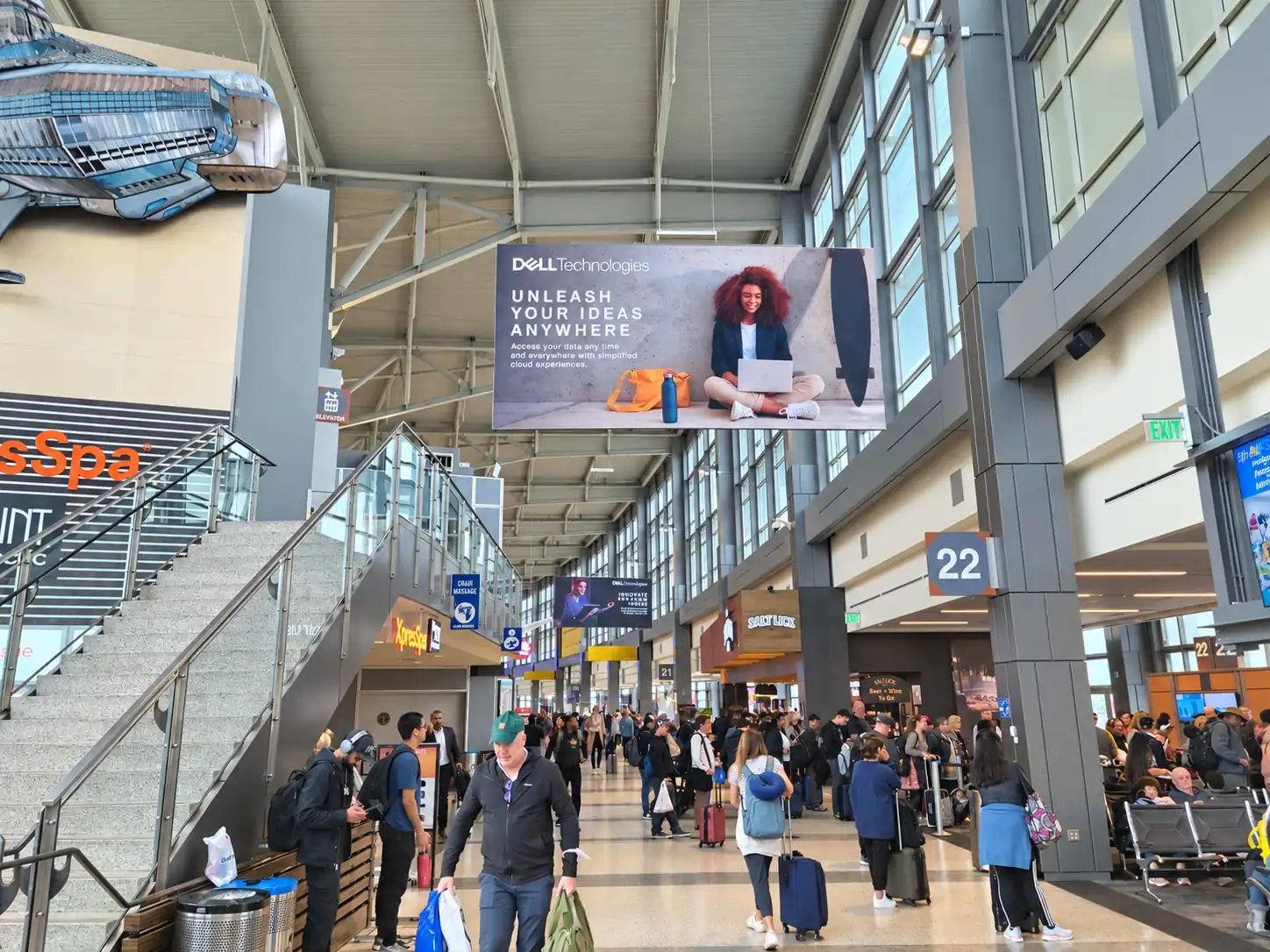
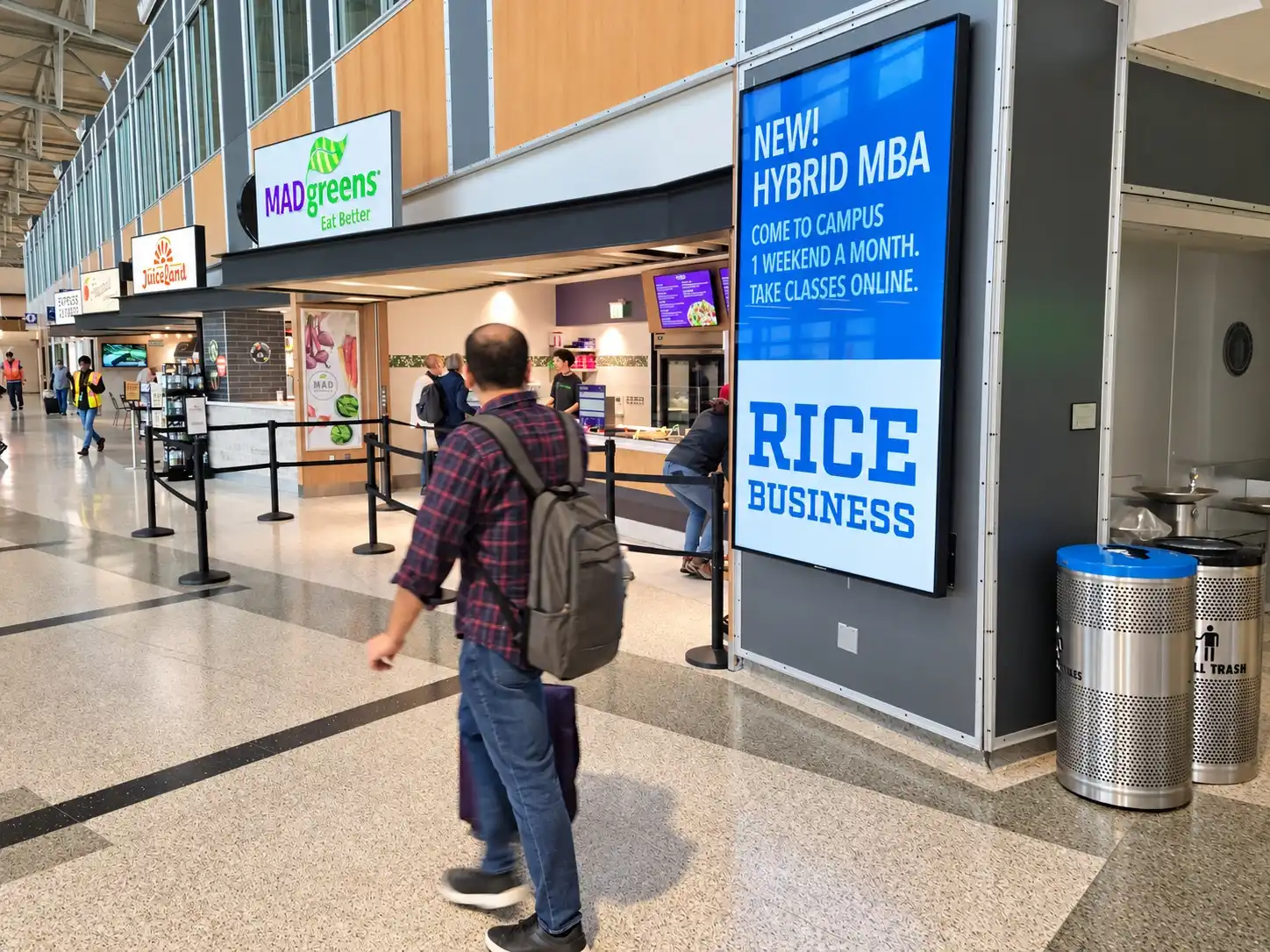
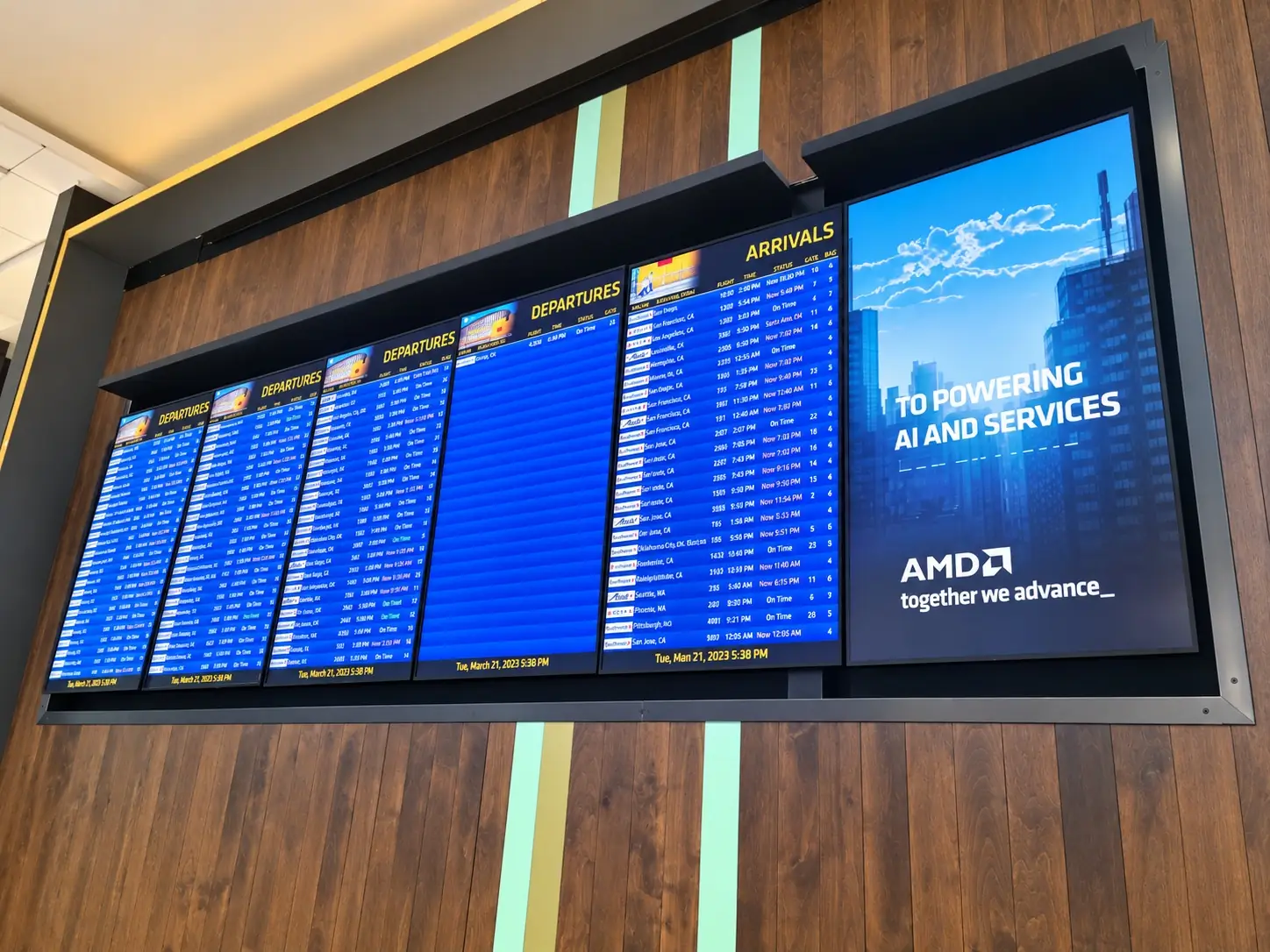
You’re in good company






The short answer
Plan a standard multi-airport campaign twelve to sixteen weeks before launch, and four to six months ahead for marquee event weeks such as CES, SXSW, or RSA, when the strongest units sell out first. Mid-tier event weeks book eight to twelve weeks out. For one airport running digital in a quiet week, plan six to ten weeks ahead. Whatever the booking window, the creative deadlines are fixed: digital creative is due 14 to 18 business days before start and static units 21 to 28 days, and a hold on inventory expires in about five business days.
Standard multi-airport flight
Time to check availability at every airport, approve a mix, clear creative through each airport's approval, and produce static units, with room for one round of changes.
Marquee event weeks
CES, SXSW, RSA, Money20/20, re:Invent, and F1 weeks. The strongest units in the terminal commit first; by eight weeks out, what is left is what nobody else wanted.
One airport, quiet week, digital
Time to confirm availability, clear creative through the airport, and meet the 14-to-18-business-day digital deadline. Static units at the same airport need the extra production and installation time.
The rule of thumb
Work backward from the launch date: creative deadline first, then contract, then hold, then the decision date. The decision date is the one that slips, and it is the one that costs you the unit.
Start your plan
Pick the path that matches where you are. Every path ends with current availability and the dates that matter.
By campaign
The more airports, formats, and media owners in the plan, the earlier it has to start, because every airport has its own availability, specs, and approval. One airport running digital in a quiet week is the fastest case; a multi-airport campaign with international airports, or any marquee event week, is the slowest.
| Campaign | Start planning | Sign contracts by | Creative due | What drives it |
|---|---|---|---|---|
| One airport, digital, quiet week | 6–10 weeks | 4–5 weeks before start | 14–18 business days before start | Fastest path; with open inventory, digital can still be booked three to five weeks out |
| One airport, static units | 8–10 weeks | 5–6 weeks before start | 21–28 days before start | Production and installation set the floor |
| Three to five U.S. airports | 12–16 weeks | 8 weeks before start | Digital 14–18 business days; static 21–28 days | Different specs and approvals at each airport |
| Eight to ten airports, U.S. plus international | 16–20 weeks | 10–12 weeks before start | As above, plus local approvals | Currency, VAT, and approval timing outside the U.S. |
| Mid-tier event week | 8–12 weeks | 6–8 weeks before start | As above | Sold by the week at airports such as Las Vegas |
| Marquee event week | 4–6 months | 3–4 months before start | As above | The strongest units commit first; holds are short |
| One-airport domination | 4–6 months | 3 months before start | As above | Every network and static unit for one flight |
Planning figures from EAM Advertising campaigns, 2015–2026. Event-week windows are for the strongest units; leftover inventory sometimes opens later.
By format
Digital formats are the fastest, because creative is uploaded rather than produced: book eight to twelve weeks ahead and deliver files 14 to 18 business days before start. Static formats add printing and installation, so book ten to sixteen weeks ahead and deliver artwork 21 to 28 days before start. Spectaculars in event weeks are the exception to everything: book them four to six months out.
| Format | Book ahead | Creative or artwork due | What sets the timing |
|---|---|---|---|
| Digital terminal networks | 8–12 weeks | 14–18 business days before start | Loop availability and share of voice; creative uploads, no production |
| Digital baggage claim networks | 8–12 weeks | 14–18 business days before start | Same as terminal networks; often bought with them |
| Spectaculars | 12–16 weeks; 4–6 months in event weeks | Digital 14–18 business days; static 21–28 days | The first units to sell out in any event week |
| Banners and wall wraps | 10–12 weeks | 21–28 days before start | Print production and installation crew scheduling |
| Airline lounges | 10–12 weeks | 14–18 business days before start | Sold by lounge, often by a separate vendor |
| Security trays | 12–16 weeks | 6–8 weeks before start | Tray printing and rotation across every checkpoint |
| Wi-Fi sponsorship | 8–12 weeks | 2–3 weeks before start | Sold by the airport's Wi-Fi provider |
| Exteriors and jet bridges | 12–16 weeks | 21–28 days before start; longer for wraps | Large-format production and airside installation |
Planning figures from EAM Advertising campaigns, 2015–2026; booking windows move with the calendar at each airport.
Working backward
For a standard multi-airport flight, the work runs sixteen weeks: brief and availability first, then the decision, the creative approval, the contracts, the files, and the posting. The one step most likely to slip is the decision, and it is the one that costs the unit, because the hold expires while the meeting is rescheduled.
| When | What you do | What happens on the buy |
|---|---|---|
| 16 weeks out | Send the brief: airports, dates, audience, budget range | Availability checked at every airport; mix and range quoted |
| 14 weeks out | Approve the mix; set the decision date | Units held; holds expire in about five business days, so the decision date and the hold have to line up |
| 12 weeks out | Approve the creative direction | Creative submitted to each airport for approval before anything is signed |
| 10 weeks out | Sign | Contracts signed with every media owner; non-cancellable from here |
| 8 to 6 weeks out | Finalize creative | Versions adapted to each airport's sizes, spot lengths, and file rules |
| 4 weeks out | Deliver static artwork | Printing and installation scheduled (21 to 28 days before start) |
| 3 weeks out | Deliver digital files | Files loaded and tested (14 to 18 business days before start) |
| Launch week | Watch for the posting confirmation | Posting confirmed before the first arrival wave; photos of static units |
| After the flight | Collect the report | Proof of posting, play logs, and any make-goods |
Compress the top half for a single airport; extend it by four to eight weeks for marquee event weeks.
Event weeks
Four to six months ahead for the strongest units in a marquee week, three to six months for the mid-tier conferences, and earlier than you think for anything with a spectacular in it. Event weeks are sold by the week at airports such as Las Vegas, the same unit costs more than in a quiet week, and contracts are non-cancellable once signed, so the decision date matters more than the discount.
| Event | Airport | Book the strongest units | How it sells |
|---|---|---|---|
| CES | Las Vegas (LAS) | 4–6 months | By the week, one-week minimum |
| NAB Show, Black Hat, Money20/20, AWS re:Invent, SEMA | Las Vegas (LAS) | 3–6 months | By the week, one-week minimum |
| F1 race week | Las Vegas (LAS), Austin (AUS) | 4–6 months | By the week at LAS; by period at AUS |
| SXSW | Austin (AUS) | 4–6 months | 28-day periods, two-week minimum |
| RSA Conference, Dreamforce | San Francisco (SFO) | 4–6 months | By period; confirm at booking |
| HIMSS and other rotating conferences | The host city's airport | 4–6 months | Depends on the host airport |
Windows are for the strongest units; mid-tier units often open later. Event dates change year to year; the airport pages carry the current calendar.
Each airport page carries its own premium-week calendar: Las Vegas airport advertising Austin airport advertising
Holds, contracts, approvals
Three things, and all of them are about sequence: holds expire in about five business days, contracts are non-cancellable once signed, and every airport approves creative before it runs. Get the order right (decide, submit creative, then sign) and the timeline holds. Get it wrong and the unit is lost, or paid for and dark.
Holds
A hold reserves a unit while you decide. When the decision slips past it, the unit goes back on the market and comes back, if it does, at the price of the week it is re-quoted in.
Contracts
At most airports a contracted spot carries a single creative unless more are bought. Sign after the creative direction has cleared approval, not before.
Approvals
Each airport reviews creative before it runs, some stricter than others. A rejection after signing does not pause the media; it runs late or blank while a new version is produced.
Outside the U.S.
Add two to six weeks to the plan for an airport outside the U.S., depending on the country, with Asia and the Middle East taking the longest. The creative deadlines are similar (in Europe, digital creative is typically due 14 to 18 business days before start and static 21 to 28 days), but approvals, currency, VAT treatment, and local production add steps, and the Middle East applies stricter content review. Terminal programs in Europe usually sell in 28-day, one-week, or two-week periods.
What changes in the price outside the U.S., on the airport advertising cost page.
Short on time
Usually not for one airport and digital formats: depending on inventory, digital can be booked three to five weeks out, the time it takes to confirm the unit and meet the digital creative deadline. Static units need the production time no matter what. Marquee event weeks are the hard case: inside eight weeks, what remains is mid-tier and leftover inventory, which can still work if the plan is built around it rather than around the unit you wanted. The fastest answer is a brief with the date in it.
Send the date, the airports, and the range. We come back with what is still open and the decision date for each airport.
Why EAM
We work backward from it. We check what's open at every airport for your week, set the decision date before any hold is placed, submit creative for approval before contracts are signed, track every airport's deadline so the files arrive on time, confirm posting before the first arrival wave, and deliver proof of posting and play logs after. One contact, one plan, one calendar, whether the campaign is one airport or twelve.
Decision date first
The hold and the approval meeting are set together, so the unit is still there when the answer is yes.
Approval before contract
Creative clears each airport's review before anything non-cancellable is signed.
One calendar
Different specs, file rules, and production windows at each airport, tracked in one schedule you can see.
Ready to plan?
Tell us the airports, the dates, and the budget range. We come back with current availability at every airport in the plan and the decision date for each one.
125+ airports · 40+ media vendors · Since 2015
“EAM made a nationwide airport campaign feel much easier to manage. The team was responsive, organized, and always on top of the details. They helped us make smart decisions with the budget, kept everything moving, and ultimately delivered exactly what we were looking for.”
 Chief Marketing OfficerFortinet · nationwide airport campaign
For agencies and consultants
Agencies and consultants bring EAM Advertising in as the airport specialist behind a client’s plan. The client relationship stays with you. We plan, buy, and report under NDA, and can work white-label.
Get our media kitAirports
EAM Advertising plans and buys at 125+ airports across North America, Europe, Latin America, Asia-Pacific, the Middle East, India, and Africa, and any combination runs under one contract. The most-requested airports are below; every airport, with search by city or code, is on the airport advertising hub.
Questions
Twelve to sixteen weeks for a standard multi-airport campaign, four to six months for marquee event weeks such as CES, SXSW, or RSA, and eight to twelve weeks for mid-tier event weeks. Digital creative is due 14 to 18 business days before start, static units 21 to 28 days.
From brief to posting, about twelve to sixteen weeks for several airports, and six to ten weeks for digital at one airport in a quiet week; with open inventory, digital can still be booked three to five weeks out. The creative deadline and the airport's approval set the floor; the decision date is what usually slips.
By September or early October for a standard flight. For CES week in Las Vegas, the strongest units commit four to six months ahead, so the decision belongs in July or August.
In marquee event weeks, yes: spectaculars and the best positions along the arrival path commit months ahead. In quiet weeks most airports have open inventory, though share of voice in digital loops still varies week to week.
Digital creative 14 to 18 business days before start. Static artwork 21 to 28 days before start, which covers printing and installation by the media owner's crew around airport operations; large wraps and exteriors can take longer. Every airport also reviews creative before it runs, so submit it for approval before contracts are signed.
About five business days at most airports. A hold reserves a unit while you decide; when it expires the unit goes back on the market, so set the decision date before the hold is placed.
Digital creative can usually be swapped mid-flight, within the media owner's upload rules and the airport's approval. At most airports a contracted spot carries a single creative unless more are bought, and static units have to be reprinted and reinstalled.
Yes for digital formats at one to three airports, if inventory is open for the week, and for static units with production started right away. A multi-airport campaign or a marquee event week inside ten weeks has to be built around what is still available.
Four weeks is the standard flight and the basis for most pricing. Event weeks are sold by the week, so one week around a conference is a real campaign. Brand programs run longer flights or recurring bursts; longer flights earn better per-week pricing, and the booking window is the same either way.
Everything after the objective. We check what's open for the week, which loops are crowded and which units will sell out, and where on the arrival path your audience actually walks. We recommend the mix, secure the units, traffic the creative through airport approval, confirm posting on day one, and deliver proof of posting and play logs after. If the airport is one market in a larger plan, the same relationship covers the others.
Airport advertising media agency. 125+ airports. Est. 2015.
Send your work email for the media kit: booking windows, formats, and planning ranges. We’ll follow up to learn who you need to reach and when, then come back with current availability and the dates that matter.
125+ airports · 40+ media vendors · Since 2015
Sources
Updated October 5, 2026 · By EAM Advertising

EAM Advertising plans, secures, and buys airport and in-flight media across 125+ airports and 45+ airlines worldwide. Founded in 2015; collective operator experience in airport media buying spans two decades. Recommendations are based on what performs for the advertiser, not on inventory we have to sell. Clients include Dynatrace, Fortinet, Rubrik, McGraw-Hill, and Wharton.