Delivery
Did it run as bought?
Posting confirmation before the first arrival wave, a photo of every static unit, play logs for every digital network. This is the layer most buyers never collect and the one that settles every later argument.
The hardest conversation in airport advertising happens after the campaign, when someone asks what it did. The answer is good if the measurement plan was set before launch and honest about what the channel can prove. This page lays out what can be measured (delivery, audience, brand lift, the business signals around the flight), what can't (a click), and how to report it so leadership believes it, from EAM Advertising, an airport advertising media agency that plans and buys across 125+ airports and 40+ media vendors.
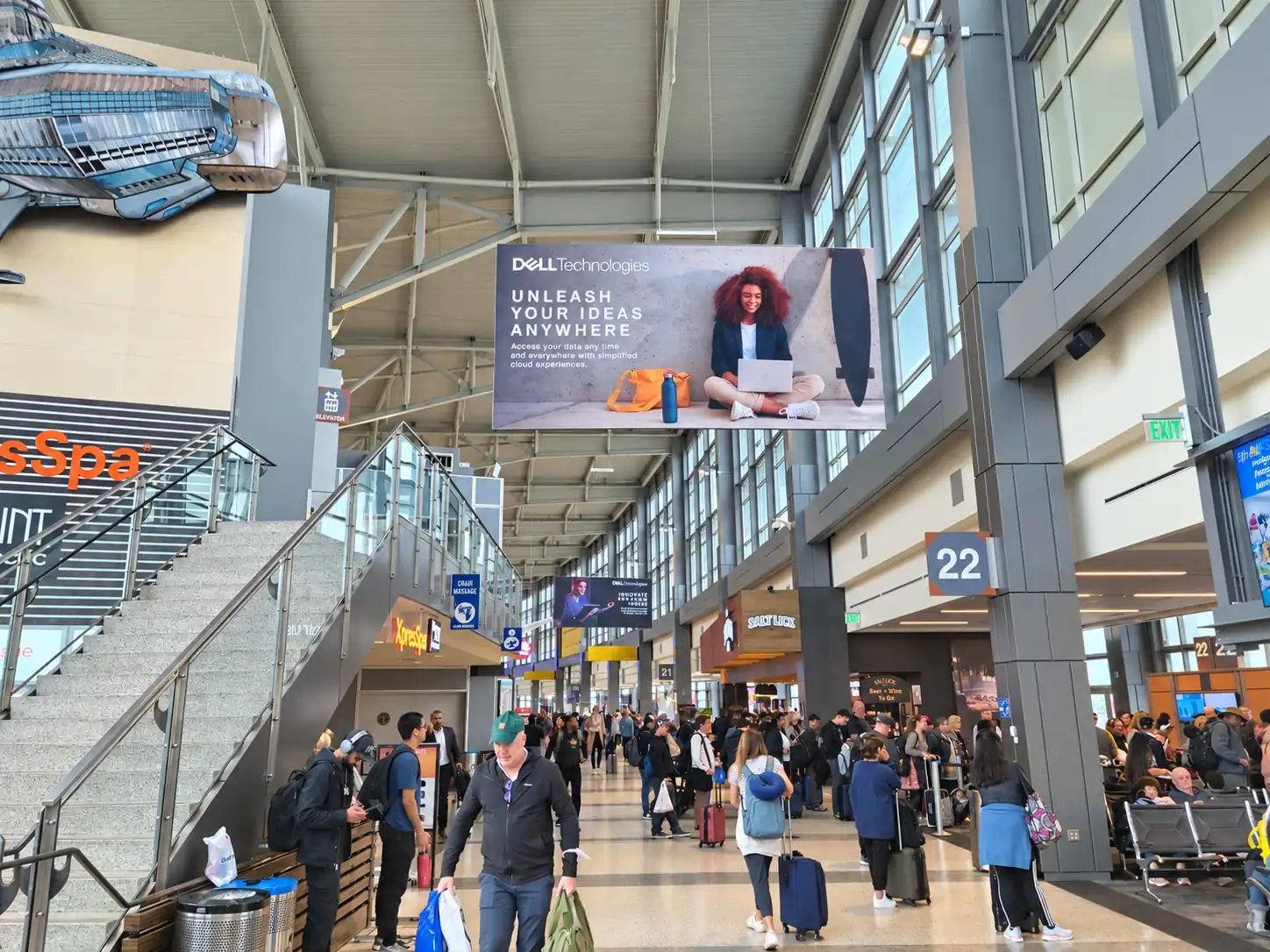

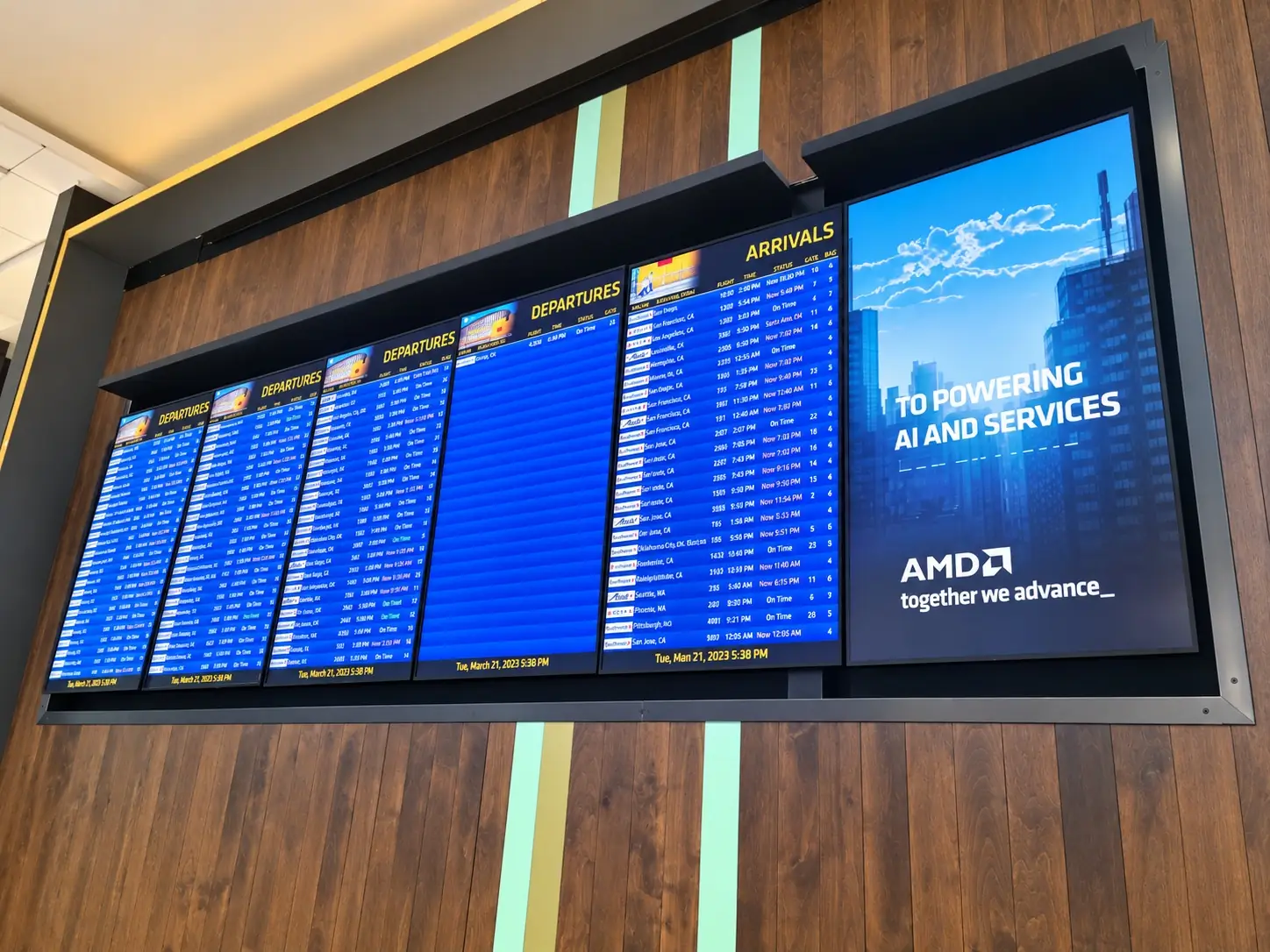
You’re in good company






The short answer
On four layers, agreed before launch. Delivery: proof of posting, photos of every static unit, and play logs for digital, which show the campaign ran as bought. Audience: the airport's passenger figures and the media owner's impression estimates for the flight, which show who was there. Brand: recall or brand-lift research when the budget justifies it, which shows what changed in people's heads. Business signals: branded search, direct traffic, and the leads and conversations that mention the airport during and after the flight. What airport advertising does not deliver is a click you can attribute, and a plan that promises one fails at the first board meeting.
Delivery
Posting confirmation before the first arrival wave, a photo of every static unit, play logs for every digital network. This is the layer most buyers never collect and the one that settles every later argument.
Audience
Passenger traffic for the airport and the terminal during the flight, impression estimates from the media owner, dwell time by placement. Reported, not guessed.
Brand and business signals
Recall and brand-lift research for larger programs; for everyone, the branded-search and direct-traffic curves across the flight, and the leads and sales conversations that mention it.
What to promise leadership
Presence in front of a named audience in a named week, with proof. Airport advertising is a perception channel: it makes a brand look established to the people who matter. Promise that, measure that, and the campaign photos become the evidence.
Start your plan
Pick the path that matches where you are. Every plan comes back with what it will be able to prove.
What you can measure
Ten things, from the three you always get to the one you commission. The first three are the campaign's own receipts; the next three say who was there; the business signals are yours to watch; brand research is the only line that costs extra.
| Measure | What it shows | Where it comes from | Layer |
|---|---|---|---|
| Proof of posting | Confirmation from each media owner that every unit is live, before the first arrival wave | Standard on every EAM Advertising campaign | Delivery |
| Installation photos | A photo of every static unit in place, with the airport and date | Standard | Delivery |
| Play logs | Per-network logs of when and how often digital creative ran | Standard for digital networks | Delivery |
| Passenger traffic | Monthly enplanements for the airport and, where published, the terminal | Public airport data, reported with the flight | Audience |
| Impression estimates | The media owner's estimate per unit and network for the flight | Reported by the media owner; methods vary | Audience |
| Dwell time | Average time passengers spend at the placement (gate, baggage claim, lounge) | Media-owner and industry research | Audience |
| Branded search and direct traffic | Week-by-week curves across the flight, compared with the weeks before | Your analytics | Business signal |
| Vanity URLs and QR codes | Visits and scans from the creative | Your analytics; modest volumes, useful as a trend | Business signal |
| Sales and pipeline mentions | Prospects and partners who mention seeing the campaign | Your CRM; ask the question on every call during the flight | Business signal |
| Recall and brand-lift research | Surveyed recall and perception change among the audience | Commissioned; justified for larger programs | Brand |
Delivery measures come with every EAM Advertising campaign. Audience measures use public airport data and media-owner estimates, whose methods vary by media owner; the report says which.
What it can't do
A click, a last-touch conversion, or a per-person impression count. Nobody taps a spectacular. The audience is counted, not tracked; impressions are estimates built from passenger traffic and placement, and each media owner estimates differently. Any plan that promises attribution from an airport unit will miss, and the miss discredits the channel. Treat airport advertising the way a sponsorship or a trade-show presence is treated: proof it happened, evidence of who saw it, and the change in how the brand is perceived.
Not a click
The unit is seen by people walking past it. The measure is whether the right people walked past, how many, and for how long.
Estimates, not counts
Passenger traffic times placement share is a reasonable estimate. Two media owners can report the same unit differently; the report should say whose method it is.
Research, not assumption
For a program large enough to justify it, a recall or brand-lift study among the audience is the only direct measure of what changed. For smaller flights, the branded-search curve is the honest proxy.
By objective
It depends on what the campaign is for. A conference surround is judged on presence in the right week; a launch on awareness lift and the search curve; an always-on program on recall over time and the sales conversations that mention it; an account-based plan on what happens inside the named accounts.
Conference surround
Proof of posting before the first arrival wave, photos from the arrivals side, passenger traffic for the show days, and a tally of attendees who mention the airport at the booth. Judge it on whether the right people saw it in the right forty-eight hours.
Product launch
Delivery proof, impression estimates by hub, branded-search and direct-traffic curves across the launch flight versus the weeks before, and brand-lift research if the launch is large enough to fund it.
Always-on program
Delivery each flight, passenger traffic by period, an annual recall study among the target audience, and the sales team's log of prospects who mention it. The measure is whether the brand reads as established by the second year.
Account-based plan
Delivery at each home airport, and the signals inside the named accounts: meetings booked, replies, mentions on calls. Small numbers, but the right ones.
Reporting
With the receipts first and the interpretation second. One page: what ran (airports, units, weeks), the proof it ran (photos and play logs), who was there (passenger figures and impression estimates, with the method named), what moved (branded search, direct traffic, mentions, any research), and what it cost. A report that leads with impressions and hides the photos invites the attribution question; a report that leads with photos of the brand in the terminal answers it before it's asked.
What ran
The plan as bought, airport by airport, with any make-goods noted.
Proof
The evidence leadership remembers. One photo per airport on the first page.
Who was there and what moved
Traffic, impressions, dwell, then the business signals and any research, each labeled with where it came from.
How to justify the spend before it's approved, on the airport advertising hub.
Why EAM
The delivery layer comes with every campaign: posting confirmation before the first arrival wave, a photo of every static unit, play logs for every digital network, and one report across every airport and media owner in the plan. We add the audience figures with their methods named, set the business-signal plan with you before launch, and scope brand research when the program justifies it. Since 2015 that has covered campaigns from one airport taken over to programs on five continents, for brands including Dynatrace, Fortinet, Rubrik, McGraw-Hill, and Wharton.
 Always-on, five airportsFlexispotChicago, Denver, Charlotte, Washington, D.C., Los Angeles. Year-long security-tray takeovers across five major U.S. airports.100 million-plus impressionsSee the campaign
  Global, five continentsDynatraceParis, London, São Paulo, Tokyo, Kuala Lumpur, Mexico City, and more. Digital large format and screen networks across five continents, under one contract.60 million people reachedSee the campaign
  National, several media ownersFortinetU.S. and Canada: Las Vegas, New York, Chicago, San Francisco, Toronto, Washington, D.C., Dallas, and more. Bought from multiple media owners as one coordinated buy, under one plan and one contract.40 million impressionsSee the campaign
 See every campaign on the case studies page.
Tell us the airports, the dates, and what leadership will ask afterward. We come back with the plan and what it will be able to prove.
Ready to plan?
Tell us the airports, the dates, the budget range, and what leadership will want to see afterward. We come back with availability, a recommended mix, and the measurement each unit delivers.
125+ airports · 40+ media vendors · Since 2015
“EAM made a nationwide airport campaign feel much easier to manage. The team was responsive, organized, and always on top of the details. They helped us make smart decisions with the budget, kept everything moving, and ultimately delivered exactly what we were looking for.”
 Chief Marketing OfficerFortinet · nationwide airport campaign
For agencies and consultants
Agencies and consultants bring EAM Advertising in as the airport specialist behind a client’s plan. The client relationship stays with you. We plan, buy, and report under NDA, and can work white-label.
Get our media kitAirports
EAM Advertising plans and buys at 125+ airports across North America, Europe, Latin America, Asia-Pacific, the Middle East, India, and Africa, and any combination runs under one contract. The most-requested airports are below; every airport, with search by city or code, is on the airport advertising hub.
Questions
On four layers set before launch: delivery (proof of posting, photos, play logs), audience (passenger traffic and impression estimates), brand (recall or lift research for larger programs), and business signals (branded search, direct traffic, and the leads that mention it). Airport advertising does not deliver an attributable click.
It is measured as a perception channel, like a sponsorship: proof the campaign ran in front of a named audience in a named week, the change in branded search and direct traffic across the flight, the conversations that mention it, and brand lift where research is commissioned. A single ROI figure built from a click does not exist for the channel.
Estimated, not counted: the media owner builds them from passenger traffic for the airport or terminal and the placement's share of that flow. Methods vary by media owner, so the report should say whose method each figure uses.
Indirectly. Vanity URLs and QR codes capture a small, trend-worthy volume; branded search and direct traffic show the curve across the flight; the best signal is asking every prospect during the flight whether they saw it and logging the answer in the CRM.
Proof of posting, installation photos, play logs, passenger traffic, impression estimates, dwell time, branded-search and direct-traffic curves, vanity URL and QR activity, sales and pipeline mentions, and recall or brand-lift research for larger programs.
Some media owners and research firms offer mobile-location panels that estimate exposed audiences; treat them as another estimate with its own method. They do not turn an airport unit into an attributed conversion.
Lead with the receipts: a photo of the brand in each terminal, proof of posting, play logs, and passenger figures for the flight; then the business signals that moved; then any research. Set that expectation before launch, so the question afterward is 'did it run as planned,' not 'where are the clicks.'
For programs large enough to fund it, yes: a recall or lift survey among the target audience is the only direct measure of what changed. For smaller flights, the branded-search curve and the sales team's log are the honest proxies.
From EAM Advertising: posting confirmation, a photo of every static unit, play logs for every digital network, passenger figures and impression estimates with their methods named, and one report across every airport and media owner in the plan.
Everything after the objective. We check what's open for the week, which loops are crowded and which units will sell out, and where on the arrival path your audience actually walks. We recommend the mix, secure the units, traffic the creative through airport approval, confirm posting on day one, and deliver proof of posting and play logs after. If the airport is one market in a larger plan, the same relationship covers the others.
Airport advertising media agency. 125+ airports. Est. 2015.
Send your work email for the media kit: formats, planning ranges, and what each format reports. We’ll follow up to learn who you need to reach and when, then come back with a plan and what it will be able to prove.
125+ airports · 40+ media vendors · Since 2015
Sources
Updated October 5, 2026 · By EAM Advertising

EAM Advertising plans, secures, and buys airport and in-flight media across 125+ airports and 45+ airlines worldwide. Founded in 2015; collective operator experience in airport media buying spans two decades. Recommendations are based on what performs for the advertiser, not on inventory we have to sell. Clients include Dynatrace, Fortinet, Rubrik, McGraw-Hill, and Wharton.