What you send
Six lines
Airports, dates, audience, objective, budget range, creative status. Ranges and best guesses are fine; 'about $200,000, March, LAX and JFK, enterprise buyers' is a brief.
A rate card is what you get when you send too little. A real quote, with current availability at every airport, a recommended mix, and the deadlines that go with it, comes from six lines of brief. This page shows the six lines, what a proposal should contain so you can judge it, three sample briefs you can copy, and what happens after you send one. From EAM Advertising, an airport advertising media agency that plans and buys across 125+ airports and 40+ media vendors.
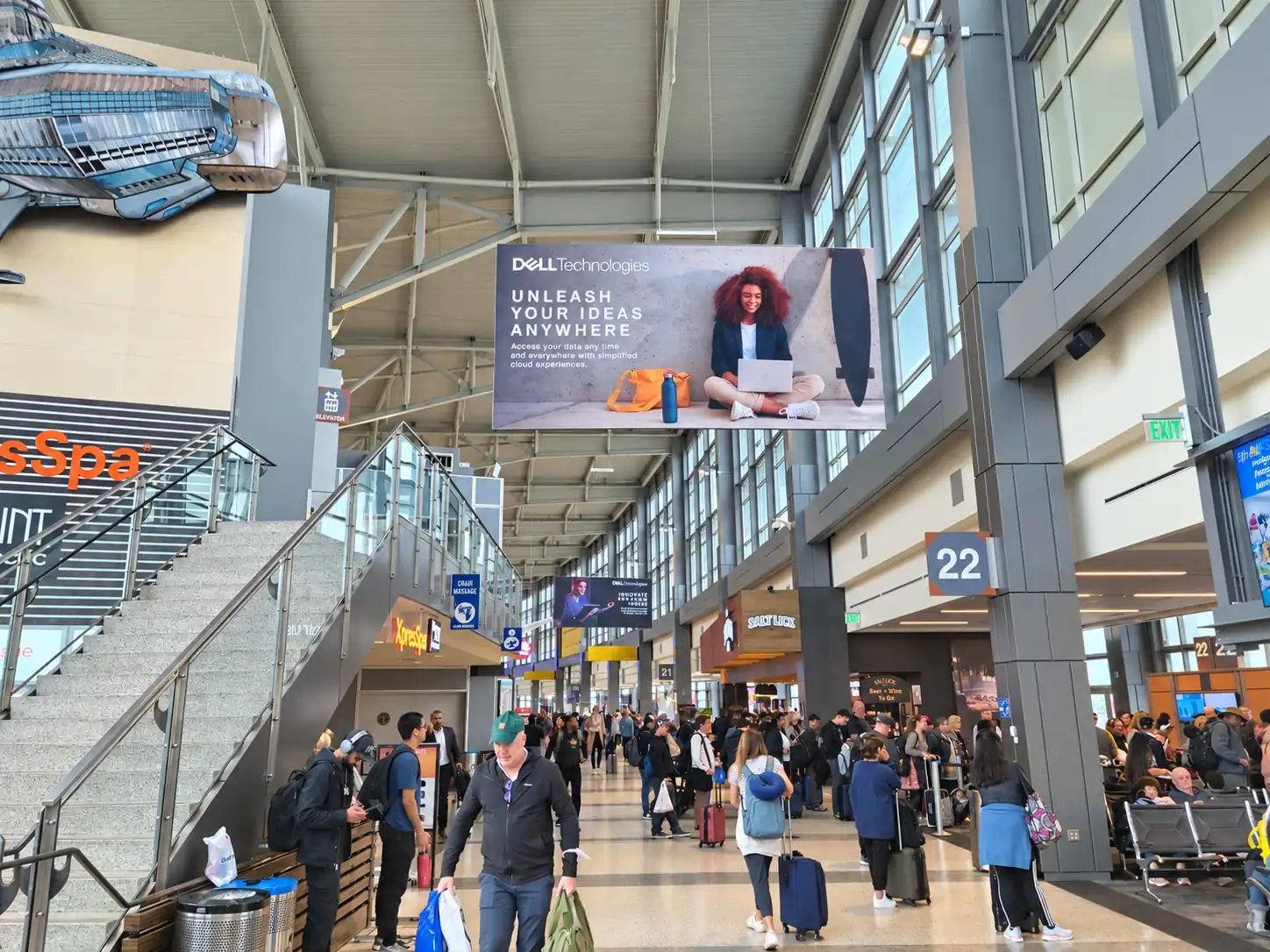
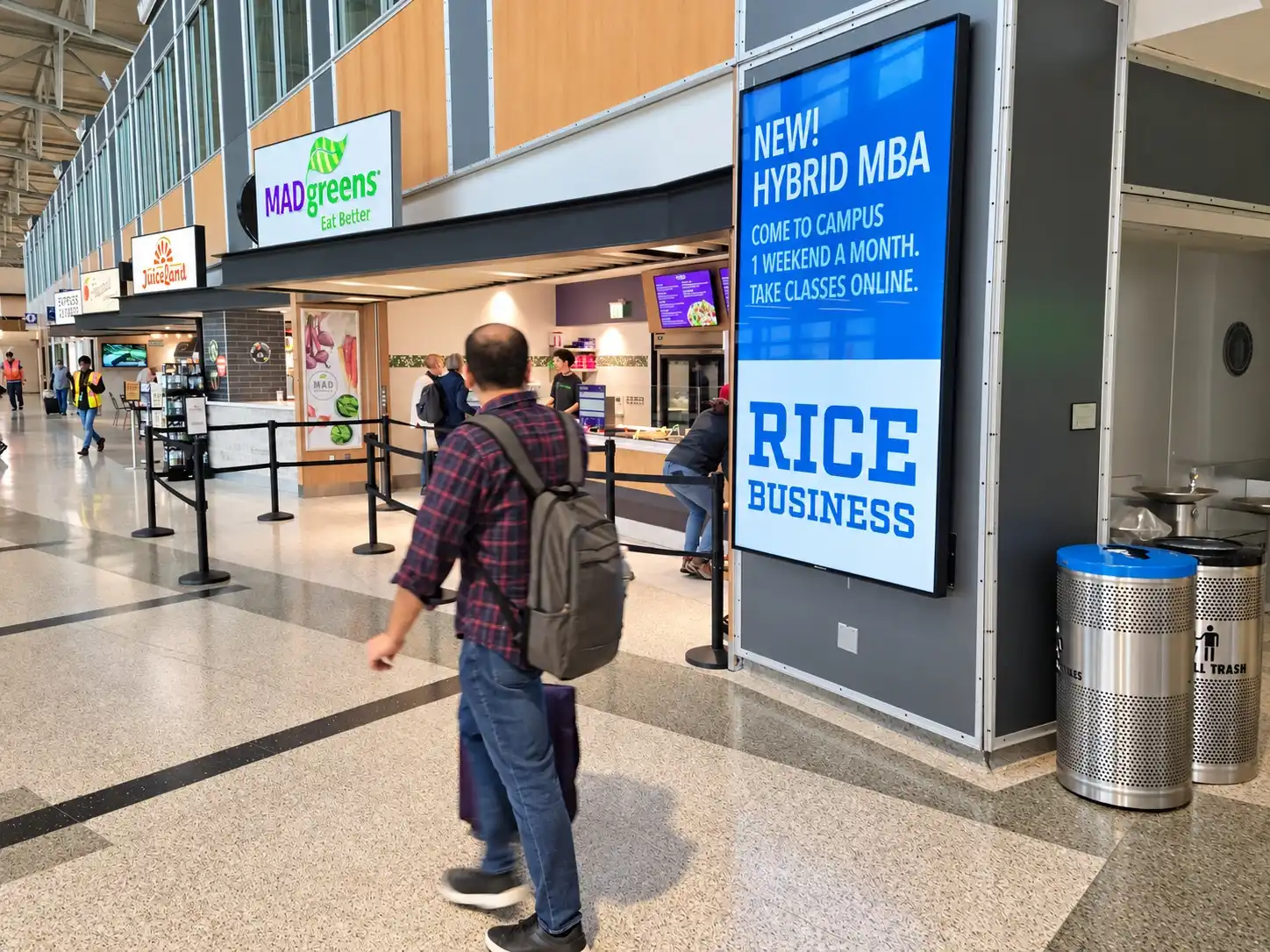
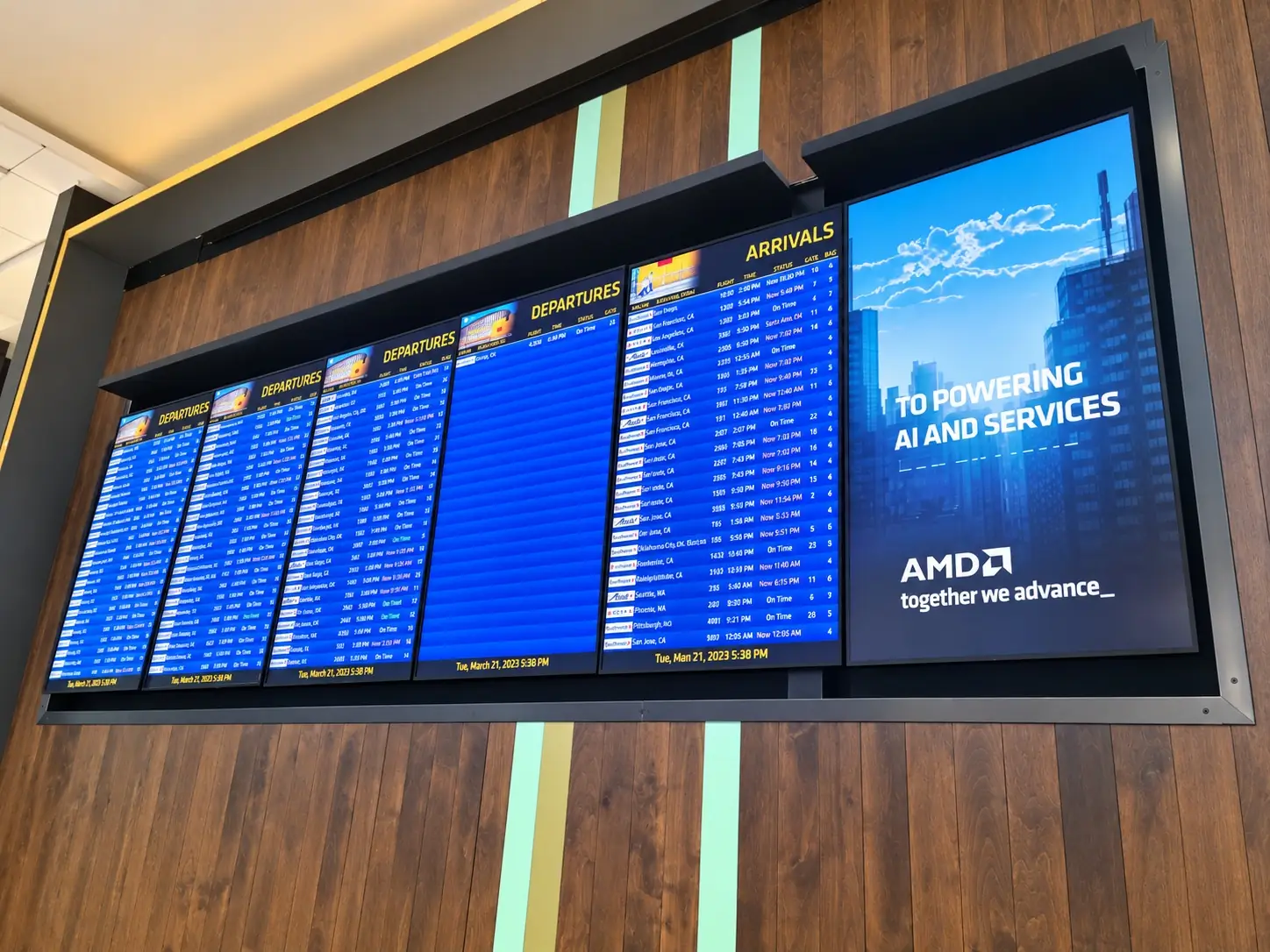
You’re in good company






The short answer
Six lines, and a range is fine for each: the airports or cities, the dates and flight length, who you need to reach, what the campaign is for, a budget range, and where the creative stands. That is enough for an airport advertising media agency to check availability at every airport, recommend a mix, and quote it with the deadlines attached. Anything less comes back as a rate card and a conversation; anything more is welcome but not required.
What you send
Airports, dates, audience, objective, budget range, creative status. Ranges and best guesses are fine; 'about $200,000, March, LAX and JFK, enterprise buyers' is a brief.
What comes back
Current availability for your dates at each airport, a recommended mix of units and positions, a media and production range, and the decision and creative deadlines for each airport.
What you do not need
The formats come out of the audience and the budget, the specs come after the units are chosen, and the media owners are the agency's problem, not yours.
The test of a brief
Could a planner who has never spoken to you check availability and recommend a mix from it alone? If yes, it is a brief. If they would have to call you first, add the missing line.
Start your plan
Pick the path that matches where you are. Every path ends with current availability and a recommended mix.
Line by line
Each line answers a question the planner would otherwise have to ask. Write them as sentences or as a list; the content matters, not the format. The examples below are the kind of detail that turns a brief into a quote on the first pass.
| Line | What to write | Why it matters | Example |
|---|---|---|---|
| Airports or cities | Name them, or the cities, in priority order; 'top five hubs' also works | Every airport has its own media owners (often several, one per format), availability, and specs; the list sets the work | LAX, JFK, ORD, plus SFO if the budget allows |
| Dates and flight length | Start date, end date, and any week that cannot move | Airport media sells in four-week flights or 28-day periods, and event weeks by the week; the dates set the buying unit and the deadlines | Four weeks starting the first Monday of March; must be live for RSA week at SFO |
| Audience | The buyer, attendee, candidate, or visitor, in one sentence | The audience decides the terminals, arrivals vs. departures, and the formats | Enterprise security buyers and CISOs flying to RSA |
| Objective | What the campaign is for | A launch, a conference, a brand program, and a recruiting push want different units | Be the name they have seen before the show floor |
| Budget range | A range, media and production together, or say which | A range sets the mix; the agency shows what it buys as breadth, depth, or time | $200,000 to $250,000 all-in |
| Creative status | Ready, in production, or not started; who is producing it | The creative status sets the timeline: digital 14 to 18 business days before start, static 21 to 28 days | Creative in production, ready in four weeks, one agency-produced spot |
Optional additions that help: target accounts and their headquarters cities, prior out-of-home experience, competitors you want to avoid sharing a loop with, and anyone who has to approve the plan.
Judging the answer
A real proposal is built from current availability, not from a rate card. For each airport it names the units and their position, the dates, the share of voice where digital loops are involved, the media range, the production range, the creative deadline, and what proof you get afterward. It also says what it checked and when, because availability changes week to week. If a proposal has no deadlines, no positions, or a line that says 'contact us for pricing,' it is a menu, not a plan.
Per airport
Which network or unit, where on the passenger path, which weeks, and how much of the loop. 'Digital network, LAX' is not a plan; 'LAX T1 arrivals corridor network, one of eight spots, March 2 to 29' is.
The numbers
Media and production shown together, with what is included (posting, proof, play logs) and what is not. One total you can take to a CFO.
The calendar
Holds expire in about five business days, so the proposal should say when the decision is needed, when creative is due at each airport, and when posting is confirmed.
How far ahead each step has to happen, on the lead-times page.
Vocabulary
A media kit is reference material: the formats, the planning ranges, the booking windows, and what a campaign looks like. A rate card is a media owner's list price for its units, which rarely reflects position, share of voice, or event-week pricing. A proposal is a plan built from your brief against current availability. A quote is the proposal's numbers, ready to contract. Ask for the media kit when you are still sizing the campaign; send a brief when you want a proposal.
Media kit
Formats, planning ranges, and booking windows across airports. The vocabulary you need to write the six lines.
Rate card
A media owner's published or quoted price per unit. Useful as a ceiling; it does not show position, share of voice, or what is actually open for your week.
Proposal and quote
A plan built from current availability with the numbers, the deadlines, and the proof attached, ready to decide on.
What happens next
The agency checks availability for your dates at every airport in the plan, which means a request to each media owner involved, then builds the mix, prices media and production together, and comes back with the proposal and the decision date for each airport. From there: you approve the mix, units are held, creative goes to each airport for approval, contracts are signed, files are delivered to each airport's deadline, and posting is confirmed before the first arrival wave. For a standard multi-airport flight the whole sequence runs twelve to sixteen weeks; one airport in a quiet week can move faster.
Availability check
What is open, which loops are crowded, which units will sell out first. This is the step a rate card skips.
The mix and the number
Units and positions chosen for the audience and the objective, priced as breadth, depth, or time against the budget range.
Decision, hold, creative, contract
The decision date is set before any hold is placed; creative clears approval before anything non-cancellable is signed.
Copy these
Three briefs in the form they arrive at EAM Advertising. None is more than a short paragraph, and each one is enough to come back with a real proposal.
Conference surround
"We're a security vendor sponsoring RSA. We want SFO the week of the show, arrivals side, so attendees see us before the show floor, plus a four-week presence at our top three buyer hubs (JFK, ORD, DFW) around it. Audience is CISOs and security buyers. Budget $250,000 to $300,000 all-in. Creative is in production, ready six weeks out, one 15-second spot and a static version."
Product launch
"Platform launch the first week of March. We want five major hubs for four weeks, built to be noticed: LAX, SFO, JFK, ORD, ATL. Audience is enterprise IT buyers. Objective is to make the launch look like a category event. Budget around $300,000 media; production on top. Creative not started; our agency will produce once units are chosen."
Always-on program
"We sell to hospital executives and want to be visible to them through the year, not just in one week. Thinking three airports our buyers fly through most (ATL, DFW, ORD), recurring four-week flights, four times a year. Budget $400,000 for the year. Creative exists from a previous campaign and can be adapted."
If you are an agency
The same six lines, plus two: whether EAM Advertising works behind your team or alongside it, and who approves. Get the six lines from the client before anyone else does; the airport plan comes back to you, under your name if you want it, and you present it. The client sees one agency; the airports see one buyer.
Why EAM
Everything after the objective. We check what's open for the week at every airport in the plan, which loops are crowded and which units will sell out, and where on the arrival path your audience actually walks. We recommend the mix, quote media and production together, secure the units, traffic the creative through airport approval, confirm posting on day one, and deliver proof of posting and play logs after. One contact, one plan, one contract, whether the campaign is one airport or twelve.
Send the six lines. We come back with current availability and a recommended mix.
Ready to plan?
Airports, dates, audience, objective, budget range, creative status. We come back with current availability at every airport in the plan and a recommended mix.
125+ airports · 40+ media vendors · Since 2015
“EAM made a nationwide airport campaign feel much easier to manage. The team was responsive, organized, and always on top of the details. They helped us make smart decisions with the budget, kept everything moving, and ultimately delivered exactly what we were looking for.”
 Chief Marketing OfficerFortinet · nationwide airport campaign
For agencies and consultants
Agencies and consultants bring EAM Advertising in as the airport specialist behind a client’s plan. The client relationship stays with you. We plan, buy, and report under NDA, and can work white-label.
Get our media kitAirports
EAM Advertising plans and buys at 125+ airports across North America, Europe, Latin America, Asia-Pacific, the Middle East, India, and Africa, and any combination runs under one contract. The most-requested airports are below; every airport, with search by city or code, is on the airport advertising hub.
Questions
Six lines: the airports or cities, the dates and flight length, who you need to reach, the objective, a budget range, and the creative status. Ranges are fine. That is enough for an agency to check availability and come back with a recommended mix and a quote.
Send a brief to an airport advertising media agency with the six lines above. The agency checks availability for your dates at each airport, builds the mix, and quotes media and production together with the deadlines attached. A quote without an availability check is a rate card.
Airports, dates, audience, objective, a budget range, and where the creative stands. Helpful extras: target accounts and their cities, prior out-of-home experience, competitors to avoid sharing a loop with, and who approves.
For each airport: the units and their position, the dates, share of voice for digital loops, the media range, the production range, the creative deadline, and the proof delivered afterward, plus the decision date, since holds expire in about five business days.
Reference material: the formats available, planning ranges, booking windows, and what campaigns look like. It is what you read before writing a brief, not a quote. EAM Advertising's media kit covers 125+ airports.
Media owners publish or quote list prices for some units. A rate card rarely shows position, share of voice, or event-week pricing, which is where the real number lives, so treat it as a ceiling and ask for a proposal built from current availability.
No. Say where it stands: ready, in production, or not started, and who will produce it. The creative status sets the timeline; digital creative is due 14 to 18 business days before start and static 21 to 28 days.
Yes, and it is usually better. A range lets the agency show what the money buys as breadth, depth, or time. Say whether the range includes production.
If you are comparing media owners at one airport, yes. For a multi-airport plan, one agency, independent of every media owner, checking all of them is the comparison: it quotes across all of them, and the plan shows what each airport's units cost against the alternatives.
Everything after the objective. We check what's open for the week, which loops are crowded and which units will sell out, and where on the arrival path your audience actually walks. We recommend the mix, secure the units, traffic the creative through airport approval, confirm posting on day one, and deliver proof of posting and play logs after. If the airport is one market in a larger plan, the same relationship covers the others.
Airport advertising media agency. 125+ airports. Est. 2015.
Send your work email for the media kit: formats, planning ranges, and booking windows. We’ll follow up to learn who you need to reach and when, then come back with current availability and a recommended mix.
125+ airports · 40+ media vendors · Since 2015
Sources
Updated October 4, 2026 · By EAM Advertising

EAM Advertising plans, secures, and buys airport and in-flight media across 125+ airports and 45+ airlines worldwide. Founded in 2015; collective operator experience in airport media buying spans two decades. Recommendations are based on what performs for the advertiser, not on inventory we have to sell. Clients include Dynatrace, Fortinet, Rubrik, McGraw-Hill, and Wharton.