Choosing airports Which airports should
you advertise in? Start
with who, not where.

The airport list is usually the first thing a campaign decides and the last thing it should. The audience decides the airports: where your buyers live, where they fly, where the conference is, where the destination's visitors come from. This page gives the order to decide in, the airport tiers and what they cost, and the airports each industry tends to use, from EAM Advertising, an airport advertising media agency that plans and buys across 125+ airports and 40+ media vendors.

We’ll follow up with the kit and next steps for your campaign.

  • 125+Airports worldwide
  • 40+Media vendors
  • 5Continents served

You’re in good company

  • Thomson Reuters
  • AMD
  • Dynatrace
  • Fortinet
  • Motorola
  • BYU

The short answer

How do you choose which
airports to advertise in?

In this order: who you need to reach, the moment the campaign is for, the budget, and only then the airport list. Business buyers point to the major hubs they connect through and the home airports of the companies you want; a conference points to its host airport for one week; a destination points to its feeder markets; a recruiting push points to the cities where the candidates live. One airport done well is a real campaign, and so is ten; the audience, not ambition, sets the count.

Business buyers

Hubs and home airports

Enterprise buyers connect through the major hubs (LAX, SFO, JFK, ORD, ATL, DFW) and fly out of the airports nearest their headquarters. Pick the two or three hubs they pass through most, then the home airports of the accounts that matter.

A conference or event

The host airport, that week

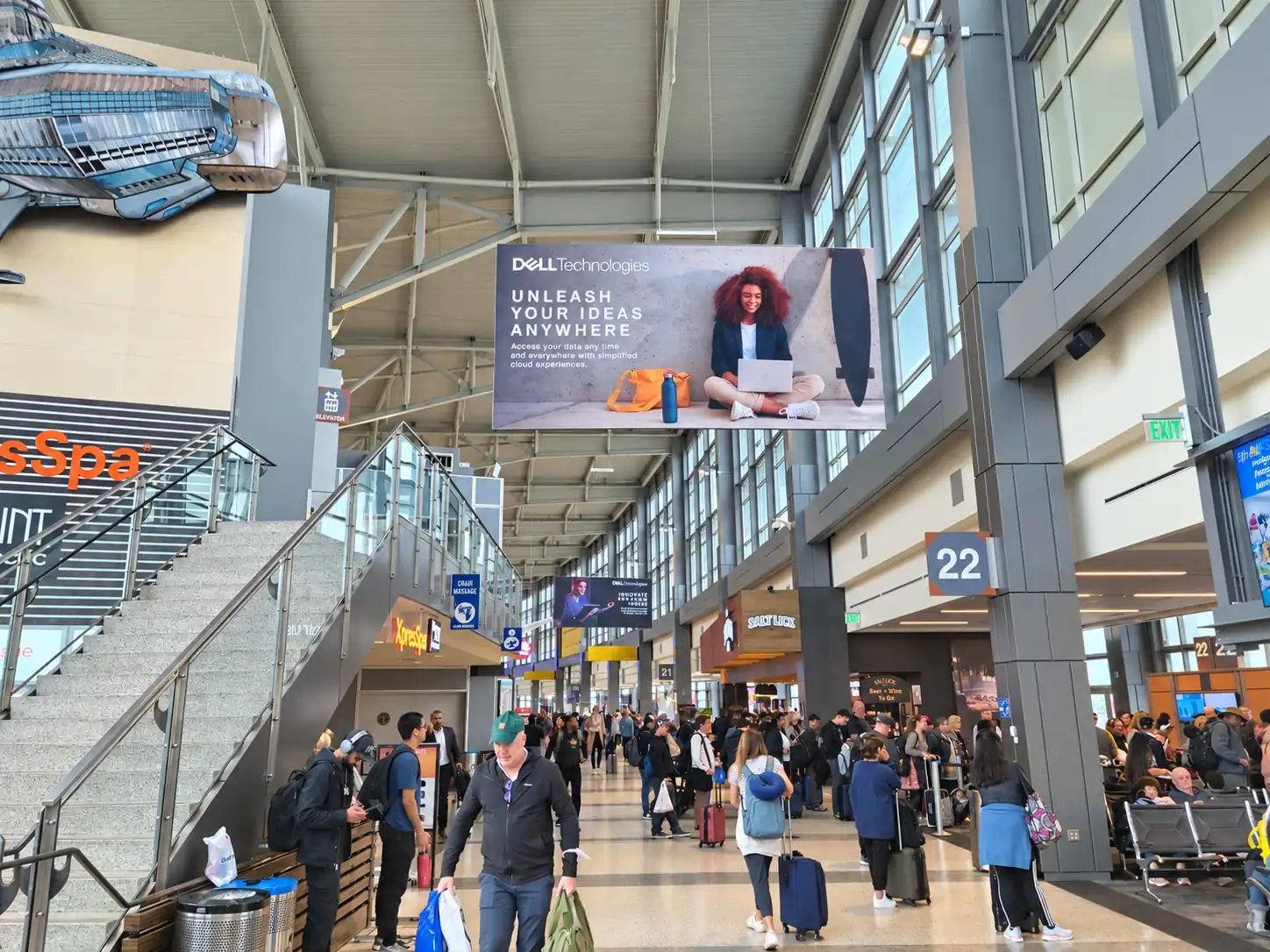
RSA points to SFO, CES and Black Hat to LAS, SXSW to AUS. One airport for one week, arrivals side, so attendees see the brand before the show floor. Add the hubs they fly in from if the budget allows.

A destination or a city

The feeder markets

A tourism board advertises where its visitors depart from, not where they land. A university recruiting executives advertises at the home airport of the professionals it wants, because the audience is the resident, not the visitor.

The one mistake

Choosing airports by passenger count. The busiest airport in the country is only the right one if your audience walks through it. A medium hub where your buyers connect beats a mega-hub full of leisure travelers, and costs less.

Airport tiers

Which airports are which,
and what does each tier cost?

Airports group into tiers by traffic and by what is for sale. Major hubs carry the most business travelers, the most formats, and the highest rates; medium hubs carry strong business and tech audiences for less; smaller airports run 25 to 40% below medium to large airports, from Phoenix (PHX) up to JFK, Las Vegas (LAS), and San Francisco (SFO); conference airports become their own tier for one week a year. Most multi-airport plans mix tiers: an anchor hub or two for impact and medium hubs for reach.

Airport tiers for advertising, with examples and what each is best for
TierExamplesWhat you getBest for
Major hubsLAX, SFO, JFK, ORD, ATL, DFW, SEA, BOS, IAD, DEN, MIAThe largest business-travel flows and the most connecting traffic; the most formats and the highest ratesNational B2B programs, launches, category credibility
Medium hubs and tech-market airportsAUS, SJC, PHX, SAN, SLC, MCO, CLT, MSP, DTW, PHLStrong business and tech audiences at lower rates; the right anchor for ABM and regional plansAccount-based plans, recruiting, regional programs
Conference airports in their weekLAS (CES, NAB, Black Hat, Money20/20, re:Invent, SEMA, F1), SFO (RSA, Dreamforce), AUS (SXSW), the HIMSS host cityThe whole audience of a show passes through one airport in one week; sold by the week; books months aheadConference surround, sponsor brands, product launches timed to a show
Smaller airportsSAT, ABQ, BOI, OMA, and most airports below the top 40Fewer formats and lower traffic, but 25 to 40% less than medium and large airports for the same campaignHome-market brands, regional recruiting, destination feeder markets
InternationalLHR, CDG, FRA, AMS, BCN, MAD, DXB, SIN, HND, YYZ, MEX, GRULocal media owners, currency, and approvals; planned in the same plan as the U.S. airports and quoted in dollarsGlobal brands, market entry, investor and partner audiences abroad

Examples, not a complete list. Planning ranges by tier are on the airport advertising cost page.

What each tier costs, by campaign shape and format.

By audience

Which airports reach the
people you need?

Start from the person, then trace the trip. A CISO flies to RSA through SFO and home through her headquarters airport. A hospital executive connects through ATL, DFW, or ORD and spends a week in the HIMSS host city. A venture investor lives in SFO, JFK, and BOS. A tourist to your state departs from Chicago, New York, or Dallas. Write the trip down and the airports write themselves.

Enterprise buyers and the C-suite

The connecting hubs

LAX, SFO, JFK, ORD, ATL, and DFW carry the heaviest business traffic. Two or three of them reach most enterprise buyers in a four-week flight; the airline lounges inside them reach the executives.

Named accounts

Their home airports

If you know the twenty accounts you want, you know twenty headquarters cities. The home airport of each is where their people start every trip, which is why account-based plans anchor on medium hubs such as SEA, AUS, SJC, or CLT.

Candidates, students, and residents

Where they live

Recruiting, universities, and civic campaigns reach residents, not visitors. The audience is on the departures side of its own city's airport, at the gates and the lounges, not at baggage claim.

Visitors to a destination

The feeder markets

A destination's visitors come from a handful of origin cities. Advertise at those departures airports, in the weeks before the booking season, and let the arrivals side of your own airport carry the welcome.

Conference attendees

The host airport, arrivals side

Everyone at the show lands at the same airport in the same forty-eight hours. Arrivals corridors, baggage claim, and the ride-share walk are where they see you first.

Investors and analysts

The financial centers

JFK, BOS, SFO, and ORD, with the lounges doing most of the work; one or two weeks around the event that matters, such as an investor day or an earnings cycle.

By industry

Which airports do companies
in your industry use?

Industry precedent is the fastest shortcut, because buyers in the same category fly the same routes and attend the same shows. The table shows where each industry tends to run and a campaign EAM Advertising planned in it; the industry pages go deeper on each.

Airports by industry, with precedent campaigns
IndustryWhere it tends to runPrecedent
CybersecurityRSA week at SFO, Black Hat week at LAS, then the hubs security buyers connect throughFortinet across the U.S. and Canada
AI and enterprise softwareSFO, SJC, SEA, AUS, and the hubs; GTC week in San Jose; re:Invent and Google Cloud Next weeks at LASDynatrace on five continents; Rubrik
Fintech and financial servicesMoney20/20 week at LAS; JFK, BOS, ORD, and the loungesFinancial services brands at the major hubs
Healthcare and health-techThe HIMSS host airport that week; ATL, DFW, ORD for hospital executivesHealthcare brands in conference weeks
Tourism boards and destinationsThe feeder markets: the origin airports visitors depart fromInvest in Canada across the U.S., Europe, and the Middle East
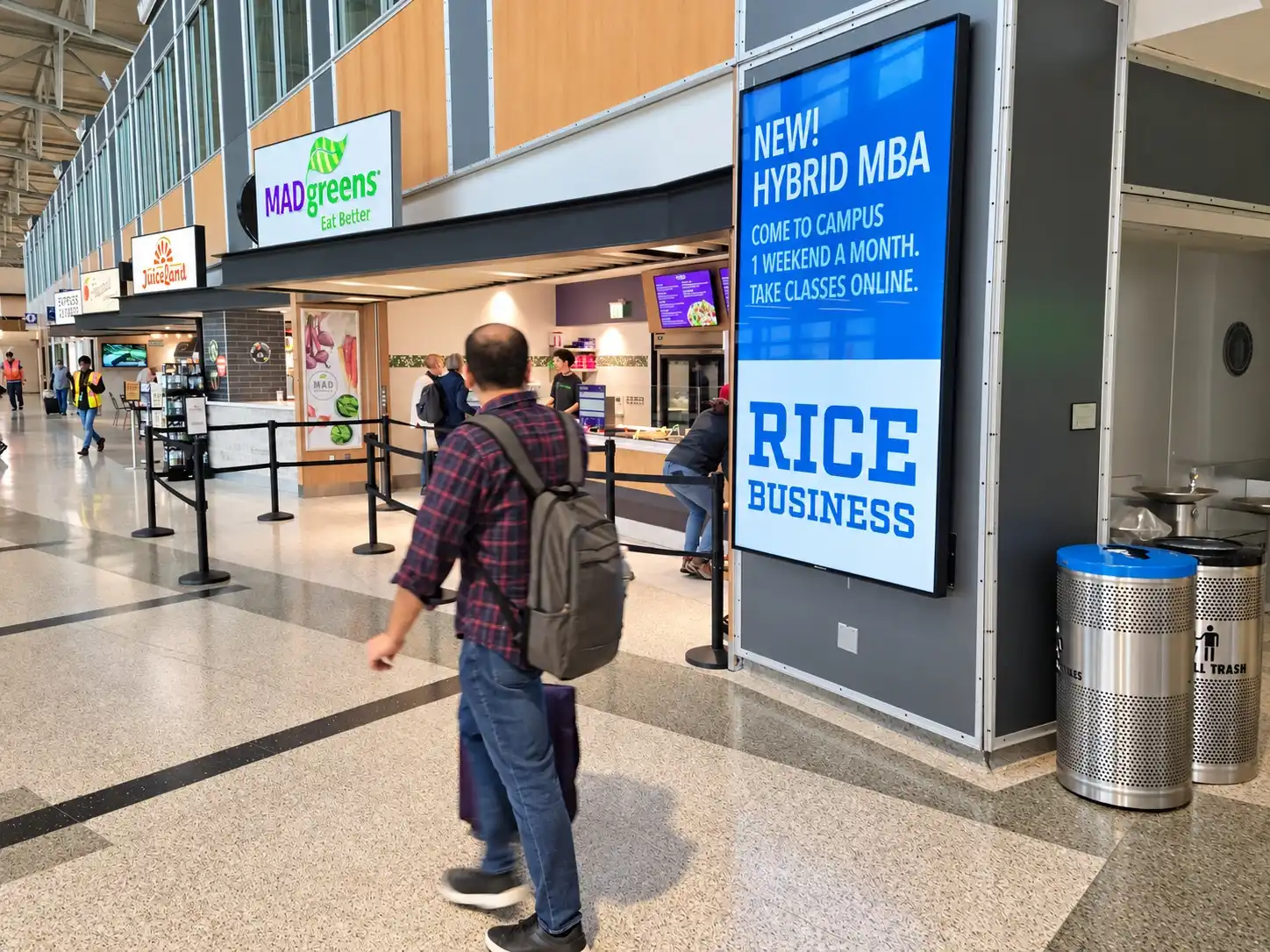
Universities and business schoolsThe home airport of the city the program recruits in; executive-education audiences at the loungesWharton in the lounges of seven U.S. cities; BYU in four markets year-round
Consumer and e-commerceThe hubs in the season that matters, with baggage claim and arrivals for a captive audienceFabric at San Jose; consumer electronics brands at the major hubs

Precedents are past campaigns EAM Advertising planned and bought, described without spend. The industry pages carry the full detail.

Case studies by industry.

How many

One airport or ten:
how many do you need?

As many as the audience needs and the budget can do properly, which is usually fewer than the first draft. One airport done well (a two- or three-network package, or a takeover for an event week) is a real campaign. Three to five hubs is the standard national B2B shape. Eight to ten, with two or three international, is a global program. The wrong answer is twelve airports with one small unit each; that buys a little of everything and the impression of nothing.

One airport

When the audience is in one place

A conference week, a headquarters city, a home market, a first test. Go deep: more of the loop, the arrival path, a takeover if the week matters.

Three to five

The national B2B shape

Two anchor hubs for impact and two or three support hubs for reach. This is where most launches and awareness programs land.

Eight or more

Global and always-on

U.S. hubs plus the international airports your buyers and partners use, in one plan under one contract, with the mix built airport by airport.

What each count costs, and how to split a budget across airports.

Arrivals or departures

Should you be on the arrivals
side or the departures side?

It follows from the audience. Visitors (conference attendees, tourists, inbound buyers) are reached on the arrivals side: the corridors after the gate, baggage claim, the walk to ground transport. Residents (your home market, candidates, local executives) are reached on the departures side: security trays, the concourses, the gates, and the lounges where they wait. A national brand program reaches both, because the same hubs are departures for some buyers and arrivals for others.

Arrivals side

Visitors and attendees

Arrival corridors, baggage claim networks, ground-transport walks. The first impression in the city, seen by everyone who landed.

Departures side

Residents and frequent flyers

Security trays, concourse networks, gates, lounges. Long dwell time, and the same travelers see the brand on every trip.

Both

National programs

Hub airports serve both audiences at once; the plan places units on each side according to who the campaign is for.

Why EAM

What does EAM Advertising do
with your audience?

We turn it into an airport list and a plan. We map where your buyers connect, where the accounts you want are based, which conference weeks matter, and which side of the terminal each audience walks, then check what's open at every airport that fits, recommend the mix, and secure it from every media owner under one contract. Since 2015 that has meant campaigns from one airport taken over to programs on five continents, for brands including Dynatrace, Fortinet, Rubrik, McGraw-Hill, and Wharton.

See every campaign on the case studies page.

Tell us who you need to reach and when. We come back with the airports that fit and current availability at each.

Ready to plan?

Know your audience?
Send a brief.

Tell us who you need to reach, the dates, and the budget range. We come back with the airports that fit, current availability at each, and a recommended mix.

125+ airports · 40+ media vendors · Since 2015

“EAM made a nationwide airport campaign feel much easier to manage. The team was responsive, organized, and always on top of the details. They helped us make smart decisions with the budget, kept everything moving, and ultimately delivered exactly what we were looking for.”

Chief Marketing OfficerFortinet · nationwide airport campaign
Airports, start date and duration, campaign goal, budget range, and anything else you can share. A few lines is plenty.

We come back with current availability and a recommended mix.

For agencies and consultants

Your client. Your plan.
We handle the airports.

Agencies and consultants bring EAM Advertising in as the airport specialist behind a client’s plan. The client relationship stays with you. We plan, buy, and report under NDA, and can work white-label.

Get our media kit
  • Your client stays yours.We work behind your team, not around it.
  • White-label and NDA.Plans and reporting can go out under your name.
  • One contract, one invoice.Every airport and media owner in the plan, under one set of terms.
  • Numbers before the client commits.Current availability and planning ranges at the proposal stage.

Questions

Questions buyers ask
about choosing airports

Which airports are best for B2B advertising in the U.S.?

The major hubs business travelers connect through: LAX, SFO, JFK, ORD, ATL, and DFW, with SEA, BOS, IAD, DEN, and MIA close behind. Two or three of them reach most enterprise buyers in a four-week flight; the airline lounges inside them reach the executives.

How do I choose airports for an airport advertising campaign?

Decide in this order: who you need to reach, the moment the campaign is for, the budget, then the airports. Business buyers point to hubs and home airports, a conference to its host airport for one week, a destination to its feeder markets, recruiting to where candidates live.

How many airports do we need for national reach?

Three to five major hubs for four weeks is the standard national B2B shape: two anchor hubs for impact and two or three support hubs for reach. Eight to ten airports, with two or three international, is a global program.

Should we advertise where our customers live or where they fly to?

Both can be right. Where they live reaches them on the departures side on every trip; where they fly to reaches them as visitors on the arrivals side. For a conference, the host airport wins; for named accounts, their home airports; for a destination, the feeder markets.

Is one airport enough for a brand campaign?

Yes, when the audience is in one place: a conference week, a headquarters city, a home market, a first test. One airport done well, with more of the loop and the arrival path, beats several airports with one small unit each.

Which airports should a cybersecurity company advertise in?

SFO for RSA week and LAS for Black Hat week, then the hubs security buyers connect through (JFK, ORD, DFW) and the home airports of target accounts. Fortinet ran across the U.S. and Canada on that logic.

Hub airports or destination airports: which is better for advertising?

Hubs carry connecting business traffic and reach buyers on both the arrivals and departures sides; destination airports reach visitors on arrival and residents on departure. For B2B awareness, hubs; for a destination campaign, the visitors' origin airports.

Do smaller airports work for advertising?

Yes, for the right audience: a home-market brand, regional recruiting, or a destination's feeder markets. They have fewer formats, but they run 25 to 40% less than medium and large airports for the same campaign.

Which airports reach executives and the C-suite?

The major hubs, and inside them the airline lounges, where executives wait longest. JFK, SFO, BOS, and ORD for finance and investors; SFO, SJC, SEA, and AUS for technology.

What does EAM Advertising handle on an airport campaign?

Everything after the objective. We check what's open for the week, which loops are crowded and which units will sell out, and where on the arrival path your audience actually walks. We recommend the mix, secure the units, traffic the creative through airport approval, confirm posting on day one, and deliver proof of posting and play logs after. If the airport is one market in a larger plan, the same relationship covers the others.

Airport advertising media agency. 125+ airports. Est. 2015.

Know who you need to reach?
Start with the media kit.

Send your work email for the media kit: formats, planning ranges, and booking windows across 125+ airports. We’ll follow up to learn who you need to reach and when, then come back with the airports that fit and a recommended mix.

We’ll follow up to learn who you need to reach and when.

125+ airports · 40+ media vendors · Since 2015

Sources

Sources
and methodology

  1. Airport tiers and audience routes: EAM Advertising planning and buying records across 125+ airports, 2015–2026. Airports are named as examples, not as a complete list.
  2. Industry precedents: campaigns EAM Advertising planned and bought, as described on the case studies page; past work, described without spend.
  3. Planning ranges and the smaller-airport line: the airport advertising cost page.
  4. Conference weeks: current booking windows on the Las Vegas and Austin airport pages. Event dates change year to year.

Updated October 5, 2026 · By EAM Advertising